Battery Energy Storage Systems (BESS)
The Power Source of the Future
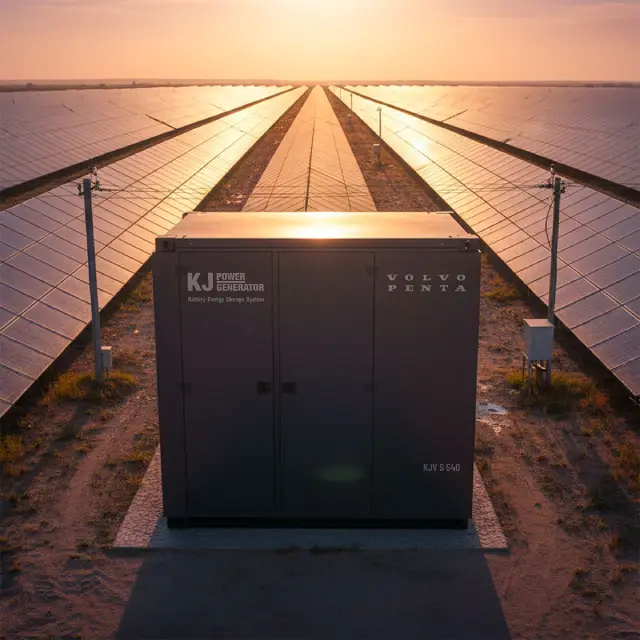
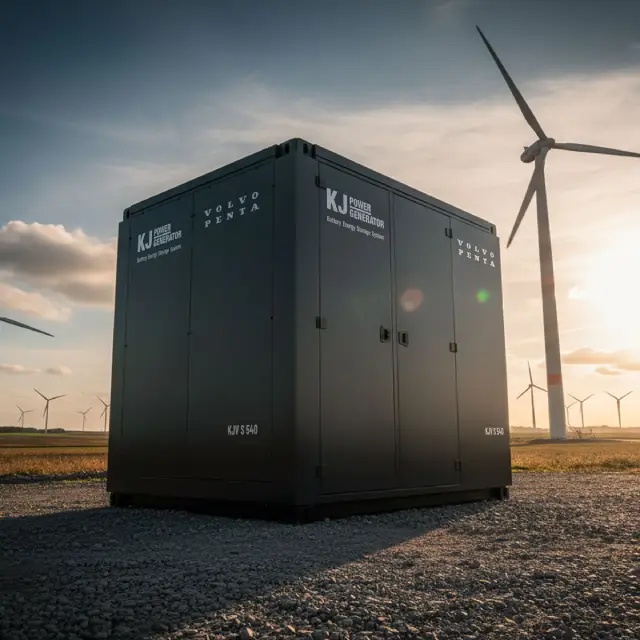
Battery Energy Storage Systems (BESS) are advanced energy storage solutions that store energy through electrochemical methods, providing a reliable and flexible power supply when needed. These systems are widely used for powering off-grid applications and balancing sudden spikes in energy demand.
#Sustainable
Battery Energy Storage Systems
BESS offers short-term, environmentally friendly energy solutions, particularly in situations where the grid is insufficient or intermittent, and where generators are not preferred due to noise and environmental pollution. In areas like construction sites, where energy consumption fluctuates throughout the week, it increases energy efficiency by allowing generators to operate less. Additionally, BESS plays a crucial role in the efficient and stable management of energy generated from intermittent renewable sources such as solar panels and wind turbines.
#Customized
Kj Power bess
Among battery technologies, Lithium-Ion batteries have gained prominence in recent years due to their durability, wide operating temperature ranges, lightweight designs, and high energy efficiency. With decreasing costs, Lithium-Ion batteries have become a preferred solution in many industries thanks to their low total cost of ownership and environmental sustainability advantages.
At KJ Power, our expert engineering and software teams design innovative Energy Storage Systems that seamlessly integrate with existing infrastructures. From large-scale, grid-connected MWh systems to medium-scale commercial and industrial (C&I) solutions, we offer a wide range of products to meet various energy needs. Moreover, our compact residential products are specially designed to optimise energy consumption, reduce costs, and minimise environmental impact.
Take a step closer to sustainable and reliable energy with KJ Power—delivering tomorrow’s energy solutions today!

Technical Specifications


General Technical Data Unit KJV S 540/350 KJV S 540/250 KJV S 360/180 KJV S 360/120 KJV S 180/80 KJV S 180/40
Three-phase voltage VAC 400400400400400400
Single-phase voltage VAC 230230230230230230
Frequency Hz 505050505050
Nominal energy storage kWh 540540360360180180
Continuous load at power factor = 0.8 kVA 3502501801208040
Overload (300 seconds)1 kV 350350350350350350
Communication technology CAN busCAN busCAN busCAN busCAN busCAN bus
Sound power level dB(A) < 55 dB(A)@7m< 55 dB(A)@7m< 55 dB(A)@7m< 55 dB(A)@7m< 55 dB(A)@7m< 55 dB(A)@7m
Protection degree IP44IP44IP44IP44IP44IP44
Phases 3Ph + N3Ph + N3Ph + N3Ph + N3Ph + N3Ph + N
Operating temperature °C -20 °C to +45 °C 2-20 °C to +45 °C 2-20 °C to +45 °C 2-20 °C to +45 °C 2-20 °C to +45 °C 2-20 °C to +45 °C 2
BATTERY
Brand VOLVOVOLVOVOLVOVOLVOVOLVOVOLVO
Quantity units 664422
Battery voltage VDC 653,4653,4653,4653,4653,4653,4
Operating voltage VDC 720720720720720720
Lithium cell chemistry LiNMCLiNMCLiNMCLiNMCLiNMCLiNMC
Discharge current 2 C2 C2 C2 C2 C2 C
DOD % (depth of discharge @25 °C ±3) %80%80%80%80%80%80
Cycle life3 >6000>6000>6000>6000>6000>6000
Manufacturing country SWEDENSWEDENSWEDENSWEDENSWEDENSWEDEN
INVERTER
Brand PowertronixPowertronixPowertronixPowertronixPowertronixPowertronix
Quantity units 111111
Continuous load at power factor = 0.8 kVA 3502501801208040
Nominal power kW 280200144966432
Accepted peak load @ 400V (300 sec) kW 350 (1,25 Pn)350 (1,75 Pn)350 (2,43 Pn)350 (3,6 Pn)150 (2,34 Pn)150 (4,68 Pn)
Manufacturing country ITALYITALYITALYITALYITALYITALY
CONTROL
Energy management system (EMS) ComApComApComApComApComApComAp
Battery management system (BMS) VOLVO PENTAVOLVO PENTAVOLVO PENTAVOLVO PENTAVOLVO PENTAVOLVO PENTA
Manufacturing country SWEDENSWEDENSWEDENSWEDENSWEDENSWEDEN
DIMENSIONS AND WEIGHT
Dimensions (L x W x H) mm 10' container10' container10' container10' container10' container10' container
Weight kg 750075005500550025002500
OPTIONS
Inlet Powerlocks on requeston requeston requeston requeston requeston request
Sockets on requeston requeston requeston requeston requeston request
Air conditioning system on requeston requeston requeston requeston requeston request
Fire extinguishing system on requeston requeston requeston requeston requeston request
Solar battery charger on requeston requeston requeston requeston requeston request
Air filtration panels on requeston requeston requeston requeston requeston request
EV Charger DC CCS2 on requeston requeston requeston requeston requeston request
EV Charger AC Type2 on requeston requeston requeston requeston requeston request

How to Size a Battery Energy Storage System in kW and kWh

BESS sizing requires two separate values: kW for how much power the system must deliver or absorb at one time, and kWh for how much energy it must store. Start with the load profile and identify the highest required charge/discharge power, then determine how long that power must be sustained. Backup applications also need a reserve strategy for critical loads, while peak-shaving projects require analysis of the site's demand peaks and tariff interval. The usable battery energy should account for operating state-of-charge limits, conversion losses and expected capacity degradation rather than assuming the full nominal kWh is always available. Inverter capability, grid-connection limits, ambient conditions, future load growth and the intended cycle frequency should be reviewed together before a final BESS size is selected.

BESS for Peak Shaving and Demand Charge Reduction

A BESS can reduce peak demand by discharging when a facility approaches a predefined power threshold and recharging when demand is lower. This peak-shaving strategy can reduce the maximum grid demand recorded during a billing interval in markets where demand charges apply. The economic benefit is therefore tariff-specific: the site must know how demand is measured, how often peaks occur and how long they last. Power capacity in kW determines how much of a peak can be clipped, while energy capacity in kWh determines how long the battery can sustain that reduction. Controls should also preserve enough state of charge for any backup or operational reserve requirement. A data-based load analysis is essential before estimating savings.

Battery Energy Storage for Solar and Renewable Energy Integration

Battery energy storage helps renewable generation by separating the time energy is produced from the time it is used. Solar or wind output can charge the battery when production exceeds the immediate load, and stored energy can then support the site when renewable output falls. A BESS can also smooth fast power changes, reduce renewable curtailment and support microgrid operation when coordinated with an energy-management system. The integration method depends on whether the project is AC-coupled or DC-coupled and on the inverter and protection architecture. Sizing should use realistic production and load profiles, including seasonal variation, rather than simply matching battery kWh to the installed renewable MW or kW rating.

Commercial and Industrial BESS for Backup Power and Energy Cost Savings

Commercial and industrial BESS projects can combine backup-power capability with energy-cost management, but those objectives should be defined separately during design. Backup requires sufficient power and usable energy for identified critical loads and the required outage duration. Cost-saving operation may involve peak shaving, time-of-use shifting or optimising on-site generation. If the same battery must perform both functions, the control strategy needs to preserve a reserve state of charge while still allowing economic cycling. The value of a BESS depends on the site's tariff, load profile, outage cost, available space, grid-connection rules and battery utilisation. A lifecycle model should include degradation, efficiency, maintenance and replacement assumptions rather than relying only on initial equipment cost.

BESS and Diesel Generator Hybrid Systems for Temporary and Off-Grid Power

A BESS can work with a diesel generator to create a hybrid temporary or off-grid power system. The battery can serve low loads and short peaks, while the generator provides longer-duration energy and recharges the storage system when required. This reduces the need to keep an engine running continuously only to cover small loads. The design must coordinate generator minimum loading guidance, inverter power, battery energy, charging power and the site's largest load steps. For temporary projects, transport, connection time and environmental conditions also matter. The energy-management system should decide when to start the generator, how much charging power to request and how much battery reserve to retain for sudden demand or a generator trip.

Battery Energy Storage Systems for Microgrids and Remote Sites

Battery energy storage is a key component in microgrids because it can balance generation and demand on a short timescale and provide a controllable source during transitions between grid-connected and island operation. At remote sites, BESS can coordinate with diesel generators and renewable sources to reduce fuel use while maintaining power availability. The battery should be sized from the actual load profile, renewable variability and required autonomy, with enough inverter capacity to handle critical power steps. Controls, protection and black-start strategy are as important as battery capacity. Remote monitoring is also valuable for state of charge, alarms, temperature and energy-flow supervision, especially where site visits are difficult or expensive.

BESS for EV Charging Stations and High-Power Charging Infrastructure

EV charging infrastructure can create high, concentrated power demand that exceeds the normal load profile of a commercial or industrial site. A BESS can supply part of that charging peak while recharging more slowly from the grid, potentially reducing the required grid connection or limiting demand peaks. The storage system must be sized for charger power, expected vehicle arrival patterns, simultaneous charging, available grid capacity and the target recharge window. High-power charging can create repeated deep or high-rate battery cycles, so thermal management and battery degradation should be included in the operating model. The control system should coordinate site loads, charger demand and battery state of charge so charging performance does not compromise other critical facility requirements.

Battery Storage Runtime, Cycle Life and Depth of Discharge Explained

Battery runtime, cycle life and depth of discharge are related but should not be treated as fixed universal values. Runtime depends on usable kWh and the actual load in kW. Cycle life depends on battery chemistry, temperature, charge/discharge rate, depth of discharge and the manufacturer's operating limits. Deeper cycling can increase the energy delivered per cycle but may affect long-term degradation, while maintaining an operating reserve can improve flexibility for backup events. Battery-management systems enforce voltage, current and temperature limits, but project controls also need to manage state-of-charge targets. Lifecycle planning should use the selected battery manufacturer's performance data for the expected duty profile and include gradual capacity fade when calculating future autonomy.

Battery Energy Storage Systems Frequently Asked Questions

kW measures power: how quickly the BESS can charge or discharge at a given moment. kWh measures energy: how much electrical energy the battery can store and deliver over time. A 500 kW power requirement and a two-hour duration, for example, describe different design questions. Actual usable energy also depends on state-of-charge limits, efficiency and battery operating constraints.

Backup duration depends on usable battery energy and the critical load. A BESS with the same kWh capacity will run much longer at a small load than at a large one. The calculation should use the protected load profile, inverter limits, reserve state of charge, conversion losses and expected battery degradation. There is therefore no single runtime that applies to every BESS.

Service life depends on battery chemistry, temperature, depth of discharge, cycle frequency, charge/discharge rate and calendar ageing. The battery manufacturer's cycle-life and warranty conditions should be applied to the project's expected operating profile. Capacity normally decreases gradually over time, so systems that must maintain a fixed backup duration may need an initial design margin or an augmentation strategy.

Sometimes, but not in every application. A BESS can provide fast, quiet backup for a defined duration, while a diesel generator can continue producing energy as long as fuel and maintenance support are available. For long outages, a hybrid BESS-generator system may provide a better balance. Replacement depends on the required outage duration, load, recharge source, reliability target and economics.

Create a time-based load profile, define the highest kW demand the BESS must support and determine the required duration in hours. Then account for state-of-charge reserve, efficiency, degradation, charge power, ambient conditions and any peak-shaving or renewable-integration objective. Backup and economic use cases should be modelled together if the same battery must serve both purposes.

Yes. A BESS can be integrated with solar panels and generators so stored energy, renewable production and engine generation are coordinated by an energy-management system. Solar can serve loads or charge the battery, the battery can cover low loads and peaks, and the generator can support sustained demand or recharge the battery. The inverter, protection and control architecture must be designed as one system.

Here for You!
Getting in touch with us has never been easier!
Not empty.
Not empty.
Not empty.
Select country.
Select country.
Not empty.
Subscribe to our newsletter

By subscribing to our newsletter, you'll be the first to receive information about our new products, promotions, and industry developments. By subscribing, you acknowledge that you have read and accepted the Personal Data Protection Law (KVKK)


Kj Power

KJ Power is a well-established diesel generator manufacturer operating in the energy sector since 1996. The company, which produces a wide range of diesel generator sets from 10 kVA to 5000 kVA, has international ISO 9001:2015 and other important certificates. As a generator company, it provides special generators for projects by offering special engineering solutions. Serving many sectors in Turkey, KJ Power has proven its global success as a generator manufacturer by exporting 90% of its production to more than 120 countries.

Jender Egsa

KJ Power Generator. All rights reserved.