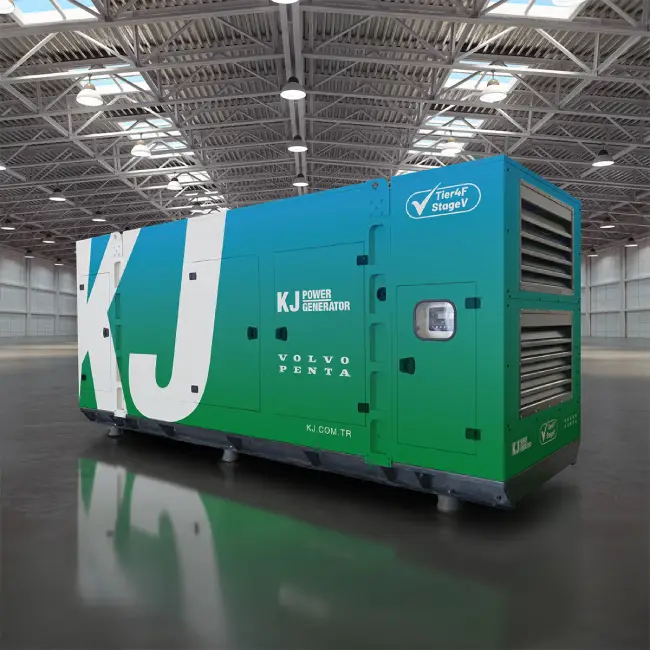
EU Stage V Emission Standards for Diesel Generator Sets
EU Stage V is the European emission framework established for internal-combustion engines used in non-road mobile machinery under Regulation (EU) 2016/1628 and its implementing requirements. It sets pollutant limits and type-approval obligations by engine category and power class. For generator projects, the first step is to determine whether the equipment and engine fall within the regulation's scope for the intended mobile or transportable application. A product described as "Stage V" should be supported by the appropriate engine approval and installed in the approved aftertreatment configuration. Project teams should also check the destination country's market-surveillance, registration, tender or low-emission-site requirements. Stage V compliance is an engine and application requirement; it should not be inferred only from the generator canopy, brand or a general sustainability claim.
Stage V vs Tier 4 Final Generator Emission Standards
EU Stage V and U.S. EPA Tier 4 Final are separate nonroad engine emission regimes. Both target pollutants from compression-ignition engines, but they use different regulatory structures, engine categories, certification procedures and numerical limits. A generator engine certified for one regime should not automatically be presented as certified for the other. International projects should specify the destination market and required certification at the procurement stage so the correct engine family and aftertreatment package are supplied. Documentation, labels, fuel requirements and service procedures should remain with the equipment throughout its life. When comparing Stage V and Tier 4 Final products, focus on the actual approval for the intended jurisdiction rather than trying to convert one emission label into an exact equivalent of the other.
How DPF, DOC and SCR Systems Work in Stage V Generators
Stage V engines can use a combination of diesel oxidation catalyst (DOC), diesel particulate filter (DPF) and selective catalytic reduction (SCR), depending on engine size and manufacturer strategy. A DOC promotes oxidation of certain exhaust components, a DPF captures particulate matter and periodically removes accumulated soot through regeneration, and SCR reduces nitrogen oxides by reacting them with ammonia generated from diesel exhaust fluid. Not every Stage V generator uses every component, so the aftertreatment package must be confirmed for the selected engine. These systems also affect installation and operation because they need suitable exhaust temperatures, space, sensors and maintenance access. Operators should understand warning indicators and regeneration or fluid requirements before deploying the generator on site.
Stage V Generators for Construction and Rental Applications
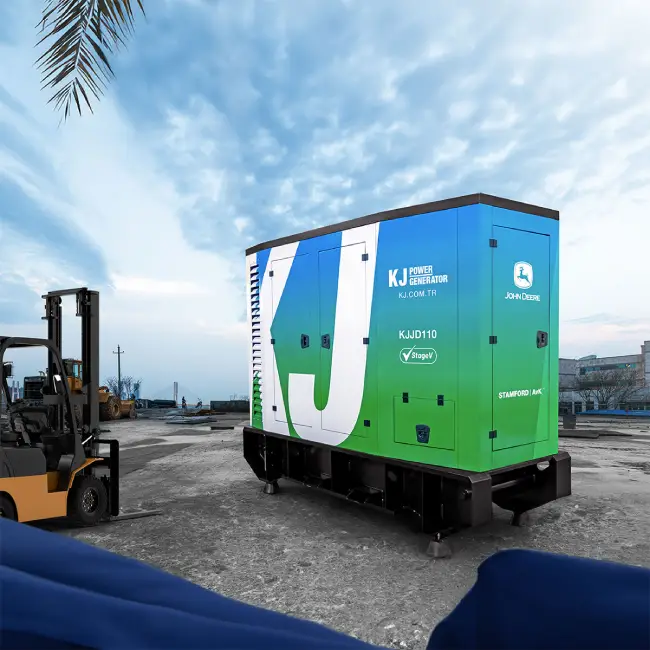
Construction and rental applications frequently use transportable generator sets in environments where engine emission compliance is part of project procurement. Stage V generator selection can therefore be important for European worksites, particularly where tenders, urban projects or fleet policies specify low-emission equipment. The generator should still be chosen from the actual load profile because prolonged light loading can influence exhaust temperature and aftertreatment behaviour. Rental fleets also benefit from clear asset records showing engine approval, aftertreatment type and any DEF requirement so the correct unit is sent to each project. Site teams need procedures for regeneration events, fluid checks and alarm response, as well as normal generator maintenance. Emission compliance and reliable operation should be managed together.
AdBlue and DEF Requirements for Stage V Diesel Generators
AdBlue and DEF are names used for diesel exhaust fluid, a urea solution used by SCR systems to reduce NOx. A Stage V generator requires this fluid only when the selected engine's aftertreatment package includes SCR. It is therefore inaccurate to assume that every Stage V engine has the same DEF requirement. Where SCR is fitted, the system needs the correct fluid quality, adequate tank level and protection from contamination. Operating without the required fluid can trigger warnings, derating or other manufacturer-defined responses. Project planning should include fluid consumption, storage conditions and replenishment logistics alongside diesel fuel, particularly for remote or long-running applications. The model-specific engine documentation should define the correct fluid and service procedure.
DPF Regeneration and Low-Load Operation in Stage V Generator Sets
A DPF stores soot from the exhaust and must periodically remove it through regeneration. Passive regeneration can occur when exhaust temperature is high enough during normal operation, while some systems can initiate active regeneration to raise temperature under controlled conditions. Long periods of very light generator loading may produce lower exhaust temperatures, which can make soot management more demanding on some engines. The correct response is not to force an arbitrary load level but to follow the engine manufacturer's operating guidance, warning indicators and regeneration procedure. Project sizing should also avoid unnecessary oversizing that leaves a generator lightly loaded for most of its operating time. Operators need to understand when regeneration is automatic, when intervention is required and what site conditions are needed for safe exhaust temperatures.
How to Choose a Stage V Generator for European Projects
Choosing a Stage V generator for a European project requires more than checking an emission label. Confirm the required power and duty, 50/60 Hz frequency, voltage, load steps, ambient conditions and mobility first, then verify that the selected engine carries the correct Stage V approval for the intended application. Review the aftertreatment package, DEF requirement if applicable, regeneration strategy, fuel quality, service access and local support. For rental or urban use, noise limits and canopy design may be as important as exhaust emissions. The project documentation should retain the engine approval and operating instructions so site teams can demonstrate compliance and maintain the aftertreatment system correctly throughout deployment.
Low-Emission Stage V Generators for Urban and Environmentally Sensitive Sites
Stage V generators can support lower-emission temporary power in urban and environmentally sensitive locations by using engines certified to stringent nonroad pollutant limits. Their benefit is strongest when the generator is also correctly sized, maintained and operated so the aftertreatment system works as intended. Urban projects often combine exhaust requirements with acoustic restrictions, limited space and public exposure, so a sound-attenuated enclosure, safe exhaust routing and careful site positioning may be required. Low-emission operation should be considered as a complete system that includes certified engine technology, suitable fuel and DEF where required, correct loading and planned service. Project-specific local rules or tender conditions can be stricter than the minimum engine standard and should be checked before mobilisation.