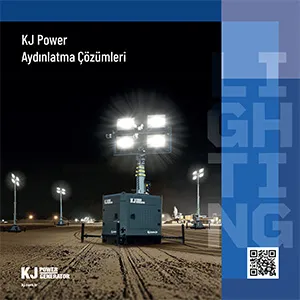
Lighting Solutions
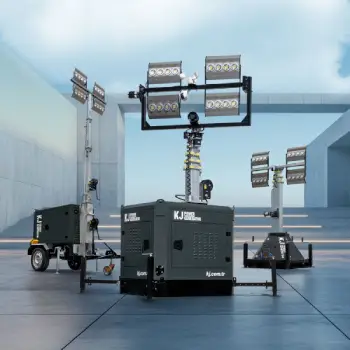
KJ Power meets the needs of modern construction sites, emergency zones, and event areas from a single source with its Cube, Mobile, and Plugin models, specially developed for challenging field conditions. With their compact designs, high-performance LED lighting, and security-focused smart technologies, KJ Power light towers turn night into day.

Light Tower Models


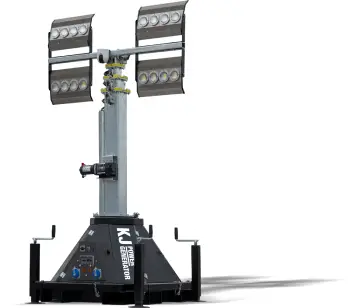
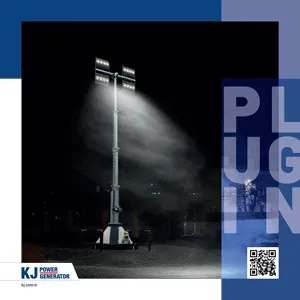
Plugin Model:
Silent, Lightweight, and Practical
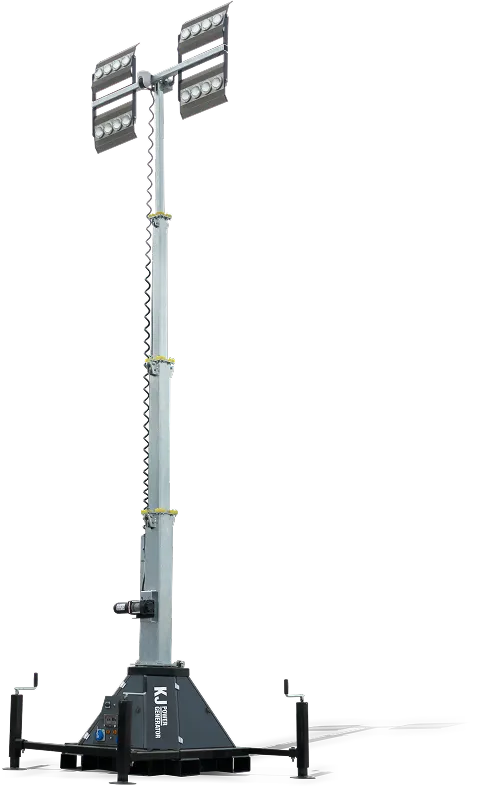
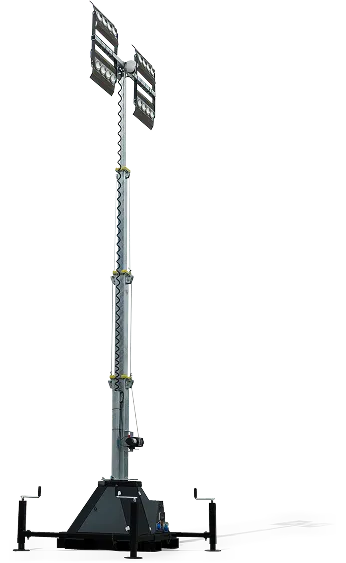
The Plugin model is a compact light tower that operates directly on electricity, without an engine or battery system.
This allows it to be:
  • Extremely lightweight and portable,
  • Any number of Plugin towers can be connected in parallel to the same power source,
  • The mast can be quickly raised and put into use with an electric motor,
  • It is equipped with 4x300W LED floodlights as standard, with a 400W option available.
This model provides energy efficiency and silent operation in situations where a motorized system is not required.
plugin light tower light tower
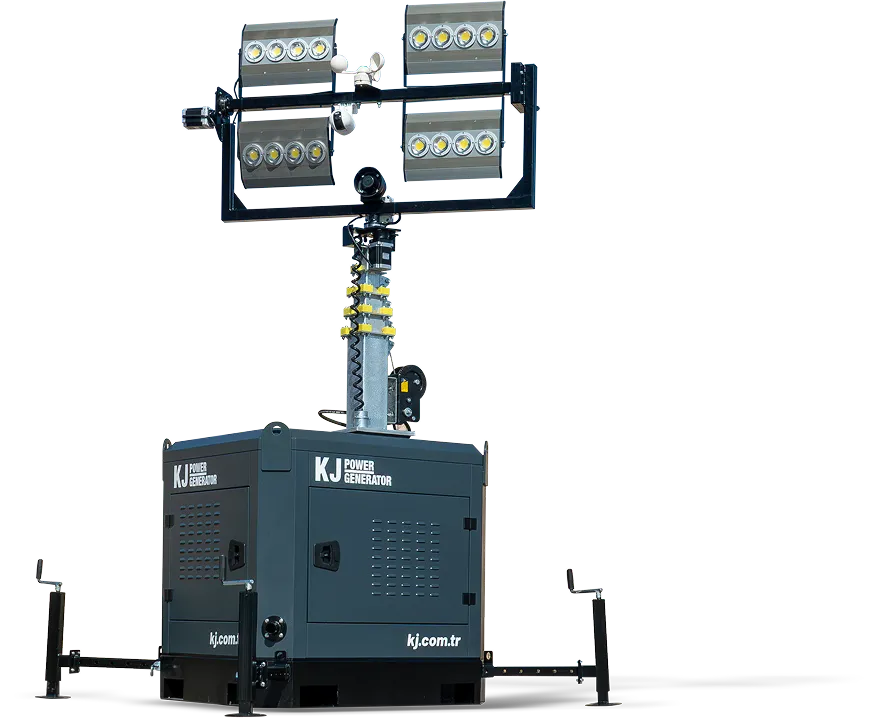
Cube Model:
Power and Intelligence Combined
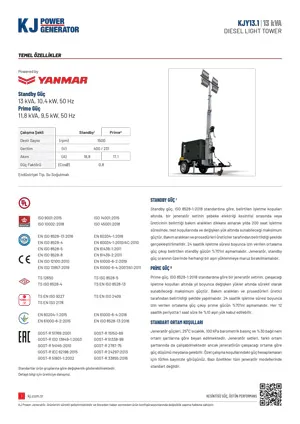
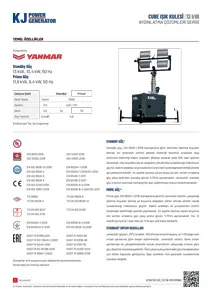
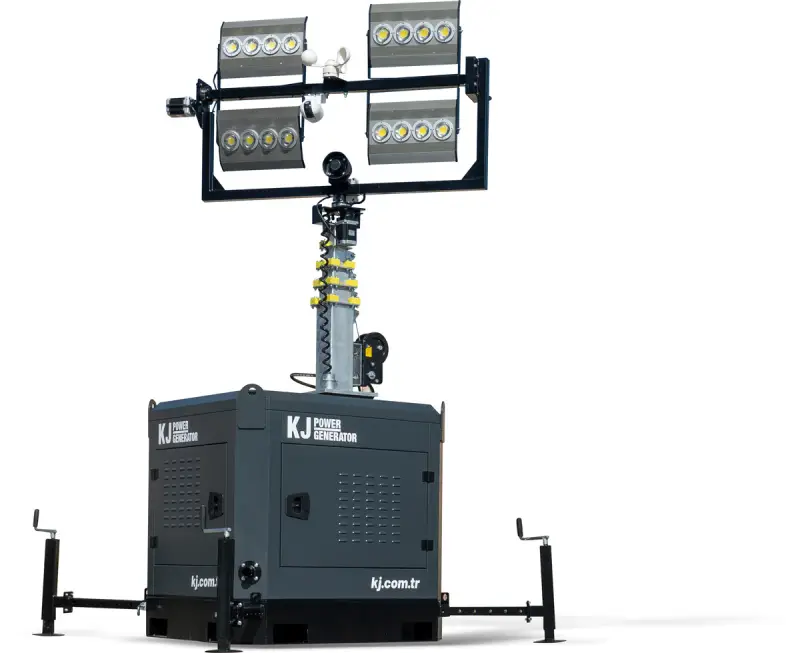
The Cube model stands out with its on-site diesel engine power generation and high-level security features:
  • The Yanmar 13 kVA diesel engine can power both its own LED lighting and Plugin towers.
  • The mast, raised by a hydraulic system, offers robust and fast setup.
  • The LED panels can be directed thanks to pan-tilt motors, allowing the light to be easily aimed in the desired direction.
  • It features 4x300W LED floodlights; higher wattage options are available.
  • The light direction can be changed even when it reaches maximum height — a key feature that sets it apart from competitors.
  • The integrated WiFi Dome Camera and announcement system provide a significant security advantage.
  • Thanks to the anemometer (wind sensor), the tower automatically shuts down in excessive wind.
  • The electrically operated hydraulic unit can provide a hydraulic outlet for external equipment when needed.
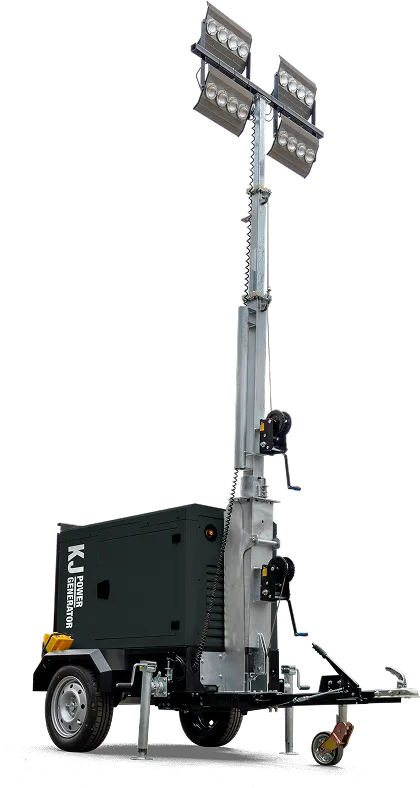
Mobile Model:
Portable and Autonomous Power
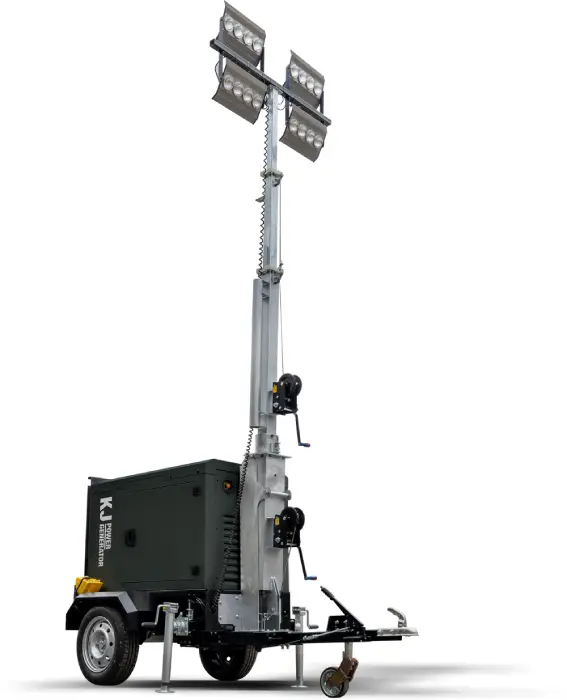
The Mobile model combines the advantages of the Cube and Plugin models. With its integrated engine and portable chassis, it offers independent and flexible operation in the field.
  • Its compact design allows for easy transportation by forklift,
  • An optional trailer system enables road transport.
This model is the ideal solution for challenging field conditions where mobility, autonomy, and reliability are critical.
mobil lighting tower

Optional Features

Camera Announcement System
An integrated speaker system that allows for voice warnings and announcements on site.
Wind Speed Meter
Measures instant wind speed and deactivates the system for safety in high winds.
Pan-Tilt Motor
A movable motor system that allows remote aiming of the LED fixtures.
Beam System
Provides more effective lighting in specific areas by focusing the light intensity.
Hybrid (Battery Option)
Provides a battery-supported energy solution to operate the LEDs without the engine running.
Hydraulic Outlet
Offers an output port for transferring hydraulic power to external equipment.
Small Wheel Option
A compact wheel option that provides ease of maneuverability in tight spaces.
Forklift Compatible Chassis
Includes fork pockets that allow for safe and easy transport by forklift.
Keep Your Work Going Non-Stop with Light Tower!
No matter how challenging the terrain and weather conditions are, let your work continue with KJ Power Light Towers.
KJ Power Light Tower


KJ Power mobile Light Towers are your solution partner designed for the continuity of field operations in areas without grid electricity.
The power of KJ Power Light Towers comes from water-cooled 1500 rpm industrial-type diesel engines.
For lighting, standard LED lighting fixtures are used.
The telescopic tower structure of the light tower, which can be extended mechanically or hydraulically, is made of galvanized material. 
With a mechanically extendable mast that can rise up to 7 meters, it can illuminate wide areas.
Thanks to the tow hitch, it offers ease of rapid relocation and transportation.
Equipped with 13”/14” wheels, a sturdy trailer structure, handbrake, and expandable stabilizing legs, the unit allows for long-term usage.
KJ Power light towers feature 3-phase / 1-phase sockets, enabling the unit to be used as a generator by drawing power from these sockets.

Giants Illuminating the Darkness: Usage Areas of Light Towers

Rising like a silent giant, lighting towers appear as the invisible heroes of the modern world. These mobile light sources take on a mission that goes far beyond providing temporary illumination.
Mobile Light Tower
mobil light tower

Cube Light Tower

Plug-in Light Tower

Light Towers: Wherever There Is a Need, They Are There

  • From construction sites to international sports organizations
  • From emergency rescue operations to mining sites
  • From open-air concerts to military bases

Ready for Every Scenario: Lighting towers are technological tools that expand the boundaries of darkness. They are silent heroes that help save lives, provide safety, and create atmosphere at events. In critical moments such as forest fires, mining operations or concert venues, they step in to ensure uninterrupted operation. With their strong and durable structures, they provide reliable energy under all conditions.

KJ Power lighting towers not only provide light. They also offer advantages such as low energy consumption, environmentally friendly features, and remote controllability. These versatile designs enable more efficient use and sustainable energy solutions, thus providing practical solutions in various fields.

These light towers, a modern symbol of humanity’s struggle against darkness, are ready anytime, anywhere.

How to Choose the Right Light Tower for Your Worksite

Choosing a light tower starts with the lighting task, not with the number of fixtures. Define the work area, required illumination level, obstacles, operating hours and whether light must cover a broad zone or a focused activity. Then compare fixture output and beam pattern, mast height, aiming flexibility, power source, autonomy, noise, transport method and setup footprint. Construction, mining, emergency response and event sites can have very different priorities even when the area size is similar. Access for towing or forklift handling, available grid power and the frequency of relocation also matter. A site lighting plan should position towers to reduce dark zones and glare while keeping masts and cables away from traffic routes, overhead hazards and active work areas.

LED Light Towers for Construction, Mining and Infrastructure Projects

LED light towers are well suited to projects that require efficient, controllable illumination with rapid start-up. Unlike traditional discharge lighting, LED fixtures can provide full output without a long warm-up period and can be directed to illuminate work faces, access roads, loading areas or safety zones. For construction, mining and infrastructure work, selection should consider more than fixture wattage: beam distribution, mounting angle, mast stability, available power, expected operating hours and the amount of relocation all affect usable illumination. LED systems can also support battery or plug-in configurations because their power demand can be managed efficiently. The lighting design should still be verified against the required lux level at the working surface and the site's safety plan.

Diesel, Hybrid and Plug-In Light Tower Options

Diesel, hybrid and plug-in light towers solve different site constraints. A diesel light tower is autonomous where grid power is unavailable and can support long field operation with a refuelling plan. A hybrid configuration can combine an engine with battery storage so lighting can operate with reduced engine runtime during suitable periods. A plug-in tower uses an external electrical supply and is useful where quiet operation, low weight and simple deployment are priorities. KJ Power's current light tower range includes engine-powered, plug-in and battery-supported options, so the choice should be based on available energy at the site, required autonomy, noise restrictions, transport needs and operating schedule rather than on a single preferred technology.

Light Tower Coverage, Mast Height and Illumination Requirements

Light tower coverage depends on the interaction of fixture output, beam angle, mast height, aiming direction and the illumination target at ground level. A taller mast can spread light over a wider area, but greater coverage does not automatically mean sufficient lux for detailed work. Shadows from buildings, equipment and terrain can also create dark zones that require additional towers or different positioning. Lighting plans should therefore use the project's target illumination level and fixture photometric data where available. Mast height should also be balanced against wind exposure and site hazards. KJ Power's current light tower information describes model-dependent mast systems, including configurations that can extend to significant working heights; the exact figure should always be confirmed in the selected model's technical document.

Mobile Light Towers for Remote and Off-Grid Locations

Mobile light towers provide independent illumination for locations where permanent electrical infrastructure is unavailable or impractical. Typical uses include road works, remote construction areas, mines, emergency zones and temporary compounds. The best mobile configuration combines adequate lighting with a transport and setup method that suits the terrain. Trailer systems, forklift pockets, stabilising legs and compact chassis options can simplify relocation, but operators still need firm ground, safe mast clearance and a defined exclusion area around the unit. Off-grid planning should also cover fuel or battery autonomy, refuelling or charging access, security and maintenance. Where remote supervision or camera options are fitted, these can support site management but do not replace physical inspection before raising the mast.

Light Tower Safety in High Winds and Harsh Weather Conditions

Safe light tower operation in wind and severe weather depends on the model's design limits and correct setup. The unit should be placed on firm, level ground, stabilisers fully deployed where provided, and the mast raised only after checking overhead clearances and nearby hazards. Wind speed is especially important because mast height and fixture area create overturning forces; equipment-specific wind limits must be followed. KJ Power's current light tower range describes a wind-speed monitoring option on certain configurations that can support protective operation, but site procedures should still define when the mast must be lowered. Rain, dust, temperature and corrosive exposure should be assessed against the enclosure and component ratings, with inspection after severe weather before the system is returned to service.

Light Tower Frequently Asked Questions

The number of light towers depends on the required lux level, site dimensions, fixture beam pattern, mast height, obstacles and the type of work being performed. A simple area calculation is not enough because shadows and glare can leave parts of a site poorly lit. Use a lighting layout or photometric data to position towers and verify illumination at the work surface, access routes and safety-critical zones.

Illuminated area varies by model, fixture output, beam angle, mast height and the minimum lux target. A tower may cast light over a very wide area but still not provide enough working illumination at the edges for a specific task. For a reliable figure, use the selected model's photometric data and the project's required illumination level rather than quoting one universal coverage area.

Mast height is model-specific. KJ Power's current light tower page describes a mechanically extendable mast configuration that can rise up to 7 metres, while other configurations can use different mast systems. The selected model's technical document should be checked for maximum height, extension method and wind-related operating limits before planning the site layout.

Continuous runtime depends on the engine load, fuel tank capacity, lighting power demand, ambient conditions and service requirements of the specific model. A larger tank can extend time between refuelling, but "continuous" operation still requires planned inspections and maintenance. For a project schedule, use the model's fuel-consumption and tank data to calculate practical autonomy at the expected load.

LED fixtures typically provide rapid start-up, high lighting efficiency, long service life and good directional control. Metal halide lamps require warm-up and cool-down periods and generally have different maintenance and energy characteristics. For mobile worksite lighting, LEDs are often preferred where frequent switching, lower power demand and controllable beam placement are important.

They can be used in demanding outdoor conditions when the specific model is designed and rated for those conditions. Rain, dust, temperature and wind limits should be checked in the technical documentation, and the tower must be stabilised correctly on site. Extreme wind is a separate structural risk for an extended mast, so the manufacturer's operating limit and any wind-monitoring system should be followed.

Subscribe to our newsletter

By subscribing to our newsletter, you'll be the first to receive information about our new products, promotions, and industry developments. By subscribing, you acknowledge that you have read and accepted the Personal Data Protection Law (KVKK)


Kj Power

KJ Power is a well-established diesel generator manufacturer operating in the energy sector since 1996. The company, which produces a wide range of diesel generator sets from 10 kVA to 5000 kVA, has international ISO 9001:2015 and other important certificates. As a generator company, it provides special generators for projects by offering special engineering solutions. Serving many sectors in Turkey, KJ Power has proven its global success as a generator manufacturer by exporting 90% of its production to more than 120 countries.

Jender Egsa

KJ Power Generator. All rights reserved.