In today's world, where power outages negatively affect business continuity, production, and daily life, having a reliable power source is not a luxury but a vital necessity. However, when investing in a generator, encountering a very wide price range in the market can be confusing. Why do generator prices vary so much, what determines generator prices, and what should you pay attention to when determining your budget? As KJ Power Generator, with over 30 years of global experience, we are aware that our customers are purchasing not just a product, but an uninterrupted future. Accordingly, we have listed these 10 fundamental elements focusing on the factors affecting generator prices so that you can make the right investment for your project or business.
What Determines Generator Prices?
The primary and most decisive factor in generator pricing is the power capacity the device produces. Generator power is generally measured in kVA or kW. Naturally, considering the relationship between generator power and price, costs increase as the generator kVA value increases. There are major differences between small home models and massive industrial generator prices and Medium Voltage Generators costs. As KJ Power Generator, to prevent overloading the system by choosing a lower generator capacity than you need or incurring an unnecessary generator cost by choosing an excessively large capacity, we offer professional power detection services before purchase. Making an accurate generator capacity selection is the first step in protecting your budget. This ensures you encounter the most ideal kVA generator prices for your project.
How Do Generator Power and kVA Value Affect the Price?
The kVA value and engine power, which express a generator's capacity, are the most basic elements determining the device's price. As the kVA value increases, the electrical load the generator can supply simultaneously increases; this necessitates using a larger engine, a powerful alternator containing more copper, and advanced cooling systems inside. This increase in material and engineering during production directly reflects on the generator's sales price.
Accurate power detection plays a critical role in budget management. Choosing a device with a lower kVA than needed just because it is cheap leads to system crashes and costly breakdowns due to overloading. Conversely, buying a generator with more power than necessary causes exorbitant prices paid during the initial purchase and high fuel costs due to the device operating inefficiently.
How Do Engine and Alternator Quality Change the Generator Price?
The heart of a generator is undoubtedly its engine. The prices of generators using world-renowned, proven engine brands (such as Perkins, Cummins, Baudouin, Doosan) are higher compared to local or lesser-known brands. Choosing a reliable generator brand is directly synonymous with generator engine quality and high generator production quality. Global engine brands offer high fuel efficiency, parts availability, and longevity.
As KJ Power Generator, we establish strategic partnerships with world-giant generator engine manufacturers and ensure long-term reliability by using globally certified engines in our products.
Price Differences in Diesel, Gasoline, and Natural Gas Generators
The type of fuel a generator operates on directly affects both the initial generator purchase cost (CAPEX) and long-term operating cost (OPEX). Depending on the fuel type, generator fuel consumption and operating budget vary:
Diesel Generator: Initial purchase costs may be higher than gasoline generator price models, but they offer high efficiency and longevity in industrial power requirements. In the market, diesel generator prices are shaped according to these high efficiency and durability criteria. Therefore, a high-quality diesel generator is more economical in the long run.
Natural Gas Generators: Preferred for being eco-friendly and not requiring continuous refueling. However, natural gas generator prices fall into a different segment due to higher installation and technology costs.
The Effect of Brand Reliability and Production Quality on Price
The most invisible yet critical factor determining generator prices is brand reliability and production quality. The price difference between two generators of the same power stems from well-established brands using world-renowned engines, 100% pure copper alternators, and highly sound-insulated stainless canopies. These high-quality devices, subjected to rigorous R&D and load tests before leaving the factory, have a higher price tag due to high material standards.
The difference you pay when choosing a reliable brand is actually an insurance premium for uninterrupted energy. Included in the price, the widespread service network, 24/7 technical support, and spare parts guarantee available even years later secure your business. While cheap, low-quality generators bought initially cause greater expenses in the long run with frequent breakdowns and low fuel efficiency; investing in a high-quality brand is the most economical solution over time.
How Important Are Sound Insulation and Canopy Features in Generator Pricing?
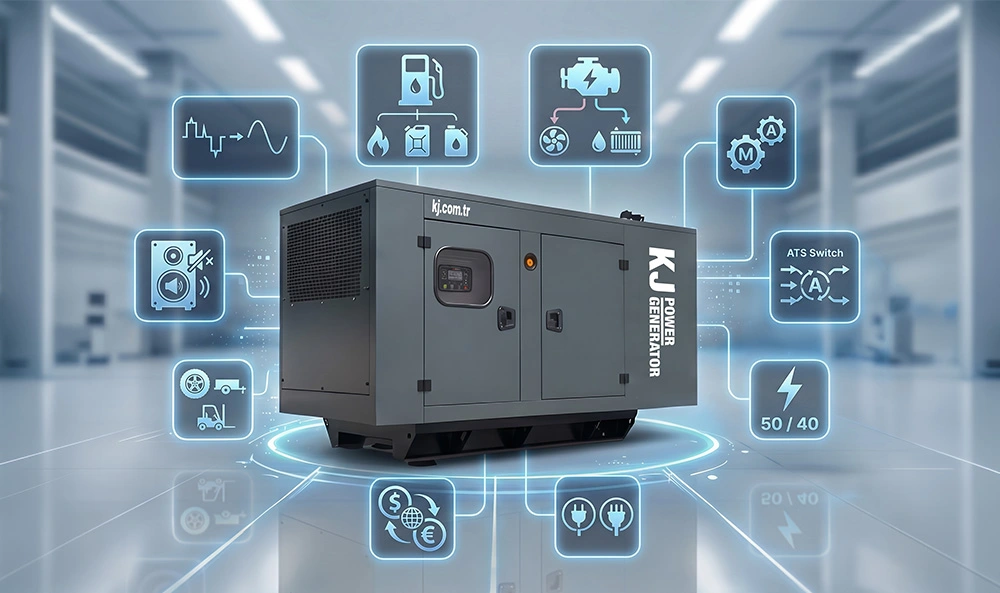
Generators can produce high noise, especially when running at full load. In hospitals, hotels, residences, or busy workspaces, the quiet operation of the generator is a legal necessity. This situation plays a decisive role in silent generator prices and canopied generator prices. Sound Insulation Canopy (Canopy): Special acoustic sponges, electrostatic powder-coated outer casing, and a design resistant to harsh weather conditions bring an additional cost to the generator price. As KJ Power Generator, we manufacture sound-insulated generator models with minimum noise levels that are both environmentally friendly and provide maximum protection against corrosion with the European standard sound insulation canopies we produce in our own facilities.
How Do Fuel Consumption and Efficiency Affect Generator Cost?
Focusing only on the initial investment cost when buying a generator is a massive delusion; because fuel consumption and operating efficiency determine the largest part of the total budget a device will generate over its lifetime. The initial purchase price of generators with new generation injection systems and highly efficient engines may be higher compared to older technology devices. However, since these efficient models consume much less fuel per electricity produced, they quickly amortize the price difference, especially in frequently or continuously operating businesses, offering a much more economical solution in the long run.
Another critical factor affecting the efficiency and thus the cost of a generator is the device's operating load ratio. The ideal point where generators reach their most economical fuel consumption values is generally the 70% to 80% load range; operating the device at low loads below 30% leads to incomplete fuel combustion, decreased efficiency, and shortened engine life. In summary, since a generator that is cheap at purchase but consumes high fuel will bring a heavy financial burden in the long run, the cost calculation should always be based on hourly fuel consumption and total operating costs.
Do Automatic Transfer Panels and Additional Equipment Increase the Price?
Modern generators are no longer just mechanical machines, but smart energy management systems. The capabilities of the digital control panels located on the generator affect the price. At this point, whether the systems are in the automatic generator prices or the simpler manual generator prices segment is related to technological equipment.
Technological features such as remote monitoring (SCADA/Modbus), the automatic transfer switch (ATS) that activates when the grid fails, fault log history, and mobile application integrations require a smart system architecture. Advanced synchronization systems (multiple generators working together) are also an important factor changing control panel costs.
Number of Phases (Single-Phase or Three-Phase)
Depending on the purpose of use, generators are manufactured as single-phase (Monophase - 230V) or three-phase (Triphase - 400V). While single-phase generators are usually sufficient in domestic or small commercial areas, three-phase generators are mandatory for industrial facilities, factories, and heavy machinery. Because the electrical design and components of three-phase systems are more complex, their prices are higher compared to single-phase models.
Cooling System and Environmental Conditions
The geographic location and ambient temperature where the generator will operate directly determine the design of the cooling system. Water-cooled systems are more costly than air-cooled systems but are suitable for continuous and heavy-duty performance. For extremely hot climates (desert conditions) or high-altitude regions, "derating" (power reduction) calculations are made for generators, and radiator sizes are increased. As KJ Power Generator, we offer tailor-made engineering solutions specific to the climate conditions of the country and region where the generator will be positioned (tropical radiator, etc.). Such special engineering applications may initially have an impact on the generator installation cost.
Why Are Maintenance, Service, and Spare Parts Support Important in Price Evaluation?
When evaluating the price of a generator, one should not only look at the figure at the time of purchase but also the total cost of ownership criterion covering its entire lifespan. Cheap generators usually mean a weak service network and unavailable spare parts. This situation can appear as high generator maintenance costs in the long run.
A widespread service network, a long generator warranty period offered by the manufacturer, generator service support offering rapid intervention, and the commitment to uninterrupted generator spare parts support are an invisible assurance offered by corporate companies and reflected in the generator price.
As KJ Power Generator, while offering 24/7 service and spare parts support to every province of Turkey, we provide a strong global after-sales service network and original spare parts support for the products we export to more than 120 countries.
In Summary: Is It Right to Look Only at the Price When Buying a Generator?
When comparing generator prices and making a detailed generator price comparison, focusing solely on the sticker price can lead to larger expenses in the long run. Accurately determining the power your project needs, choosing quality components, and partnering with a reliable manufacturer is the most profitable investment.
If you want to determine the high-quality, original generator model that best suits your needs and receive an offer for current generator prices regarding our highly efficient solutions; you can contact our KJ Power Generator expert engineering team at any time.


